ABOUT TAILINGS STORAGE
Tailings are the finely ground rock left over after the gold and silver have been extracted. A tailings storage facility (TSF) is a structure built for the purposes of storing these tailings and other by-products from the gold and silver extraction process.
The tailings from the Waihi mines are currently stored in tailings impoundments. Waihi’s tailings impoundments are carefully engineered rock structures that are designed to withstand significant seismic and weather events. They are made up of several separate layers and are designed to the same specifications as a water-retaining structure.
OVERVIEW
The current TSF1A, TSF2, and the proposed Gladstone Open Pit tailings storage have insufficient capacity for the tailings volume from processing ore from the proposed Wharekirauponga Underground Mine and Gladstone Pit.
As part of the Waihi North Project, OceanaGold Waihi is proposing to construct a new tailings storage facility (TSF3) immediately east of the current facilities and adding tailings storage within the Gladstone Open Pit.
The tailings from the Waihi mines are currently stored in tailings impoundments. Waihi’s tailings impoundments are carefully engineered rock structures that are designed to withstand significant seismic and weather events. They are made up of several separate layers and are designed to the same specifications as a water-retaining structure.
OVERVIEW
The current TSF1A, TSF2, and the proposed Gladstone Open Pit tailings storage have insufficient capacity for the tailings volume from processing ore from the proposed Wharekirauponga Underground Mine and Gladstone Pit.
As part of the Waihi North Project, OceanaGold Waihi is proposing to construct a new tailings storage facility (TSF3) immediately east of the current facilities and adding tailings storage within the Gladstone Open Pit.
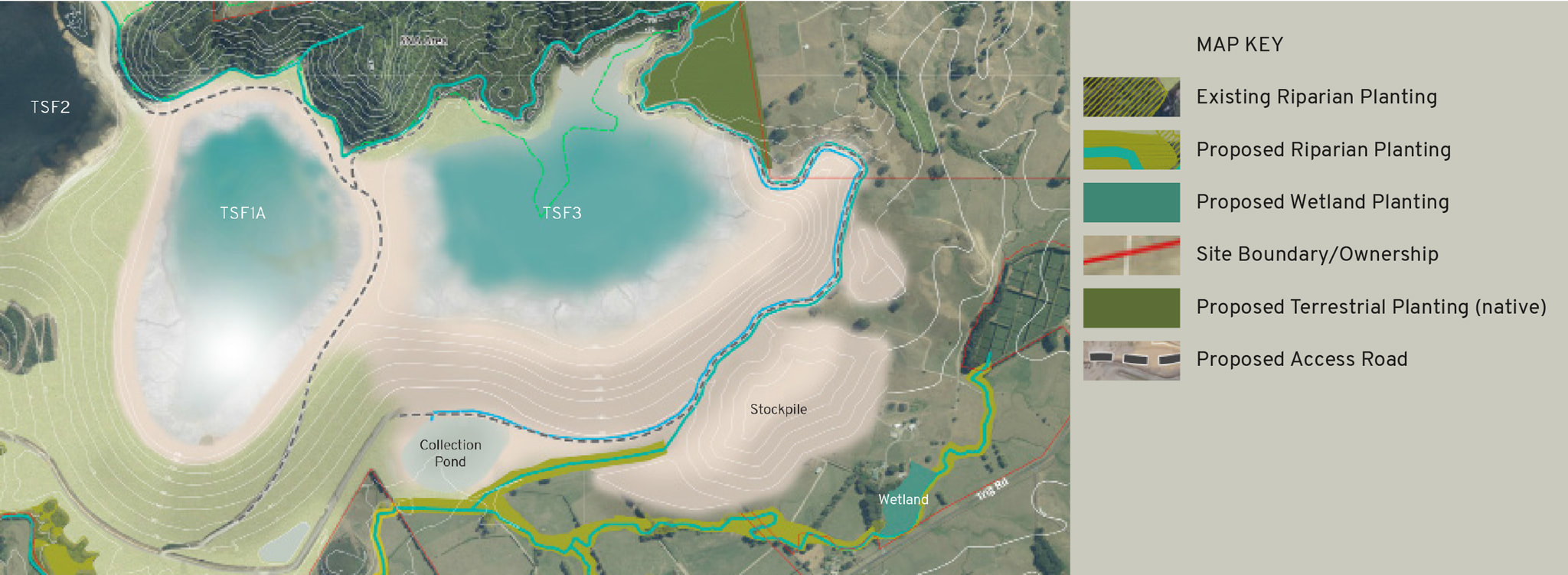
TAILINGS STORAGE FACILITY 3
TSF3 is proposed to be constructed immediately east of the current facilities.
PREPARATION
Geotechnical investigations have identified that TSF3 construction will firstly require material to be stripped from its footprint. This area is about 60 Ha, and the material will be stockpiled on OceanaGold Waihi land close to Trig Road North. It is likely that this material will be used for future rehabilitation work or for use later in the project.
CONSTRUCTION
To provide for a structure of similar geotechnical integrity as the existing embankments, rock from the Gladstone Open Pit and the already consented Martha Open Pit north wall layback will be required to construct TSF3.
During the initial foundation works, silt control will be provided to avoid dirty water discharging to waterways.
There will also be an option to pump this water to the existing Water Treatment Plant. At a minimum, erosion and sediment control will follow Waikato Regional Council guidelines.
TSF3 construction will also involve building an uphill diversion drain, perimeter drains to capture stormwater runoff, and a perimeter road to provide access for operation and maintenance.
For operations, a fully lined silt collection pond will be constructed in the lowest area of the TSF3 site. All runoff collected in the pond will be pumped to the Water Treatment Plant. The new collection pond will also include an overflow spillway to the Ruahorehore Stream.
TSF3 will be lined to reduce the potential for any seepage to enter the groundwater system. At the lower levels TSF3 will be lined with be a 1.5 mm thick liner, while at higher levels, a layer of low-permeability, compacted clay is proposed, as is used in the existing TSFs.
All designs and plans are put through a rigorous review process and will need to adhere to all regulatory requirements. If the required consents are granted, the structure will be extensively monitored throughout and beyond its construction phase, and all monitoring data will be annually collated and reported on. The data and reports will be independently reviewed to ensure the ongoing structural integrity and safety of the structure. The independent review findings will be reported to the Council after each review.
REHABILITATION
The outer walls of the TSF3 embankment will be progressively rehabilitated to pasture during construction. This involves applying a layer of subsoil material, followed by a layer of topsoil and then agricultural seed mix. The land will then be grazed by young dry-cattle.
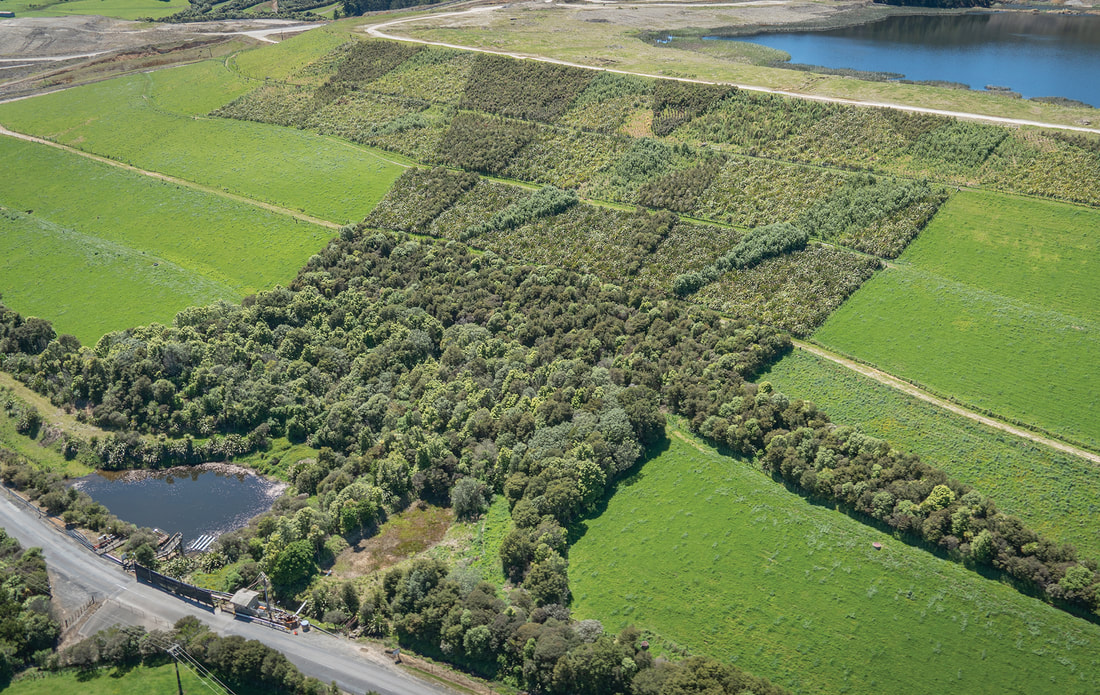
Native trees and shrubs have been planted on various areas of TSF1A and TSF2. These plantings provide a food source and nesting sites for birds. Similar planting is planned for TSF3.
Once the deposit of tailings ceases, it will continue to consolidate, and after a relatively short period of time, water quality in the tailings storage pond will reach a level suitable for direct discharge to the Ohinemuri River.
When the tailings impoundments are later closed, they will be partially capped, leaving a wetland and small pond on the top. The pond outlet structures will allow fish passage from nearby waterways. The ponds will be able to support the range of aquatic organisms typically found in such pond-like environments and wetlands. The riparian planting adjacent to the pond edge will trap sediment and nutrients in the runoff waters and assist in maintaining water quality.
PREPARATION
Geotechnical investigations have identified that TSF3 construction will firstly require material to be stripped from its footprint. This area is about 60 Ha, and the material will be stockpiled on OceanaGold Waihi land close to Trig Road North. It is likely that this material will be used for future rehabilitation work or for use later in the project.
CONSTRUCTION
To provide for a structure of similar geotechnical integrity as the existing embankments, rock from the Gladstone Open Pit and the already consented Martha Open Pit north wall layback will be required to construct TSF3.
During the initial foundation works, silt control will be provided to avoid dirty water discharging to waterways.
There will also be an option to pump this water to the existing Water Treatment Plant. At a minimum, erosion and sediment control will follow Waikato Regional Council guidelines.
TSF3 construction will also involve building an uphill diversion drain, perimeter drains to capture stormwater runoff, and a perimeter road to provide access for operation and maintenance.
For operations, a fully lined silt collection pond will be constructed in the lowest area of the TSF3 site. All runoff collected in the pond will be pumped to the Water Treatment Plant. The new collection pond will also include an overflow spillway to the Ruahorehore Stream.
TSF3 will be lined to reduce the potential for any seepage to enter the groundwater system. At the lower levels TSF3 will be lined with be a 1.5 mm thick liner, while at higher levels, a layer of low-permeability, compacted clay is proposed, as is used in the existing TSFs.
All designs and plans are put through a rigorous review process and will need to adhere to all regulatory requirements. If the required consents are granted, the structure will be extensively monitored throughout and beyond its construction phase, and all monitoring data will be annually collated and reported on. The data and reports will be independently reviewed to ensure the ongoing structural integrity and safety of the structure. The independent review findings will be reported to the Council after each review.
REHABILITATION
The outer walls of the TSF3 embankment will be progressively rehabilitated to pasture during construction. This involves applying a layer of subsoil material, followed by a layer of topsoil and then agricultural seed mix. The land will then be grazed by young dry-cattle.
Native trees and shrubs have been planted on various areas of TSF1A and TSF2. These plantings provide a food source and nesting sites for birds. Similar planting is planned for TSF3.
Once the deposit of tailings ceases, it will continue to consolidate, and after a relatively short period of time, water quality in the tailings storage pond will reach a level suitable for direct discharge to the Ohinemuri River.
When the tailings impoundments are later closed, they will be partially capped, leaving a wetland and small pond on the top. The pond outlet structures will allow fish passage from nearby waterways. The ponds will be able to support the range of aquatic organisms typically found in such pond-like environments and wetlands. The riparian planting adjacent to the pond edge will trap sediment and nutrients in the runoff waters and assist in maintaining water quality.
COPYRIGHT 2022